
Certification

Grass Fed Pasture Production Certification
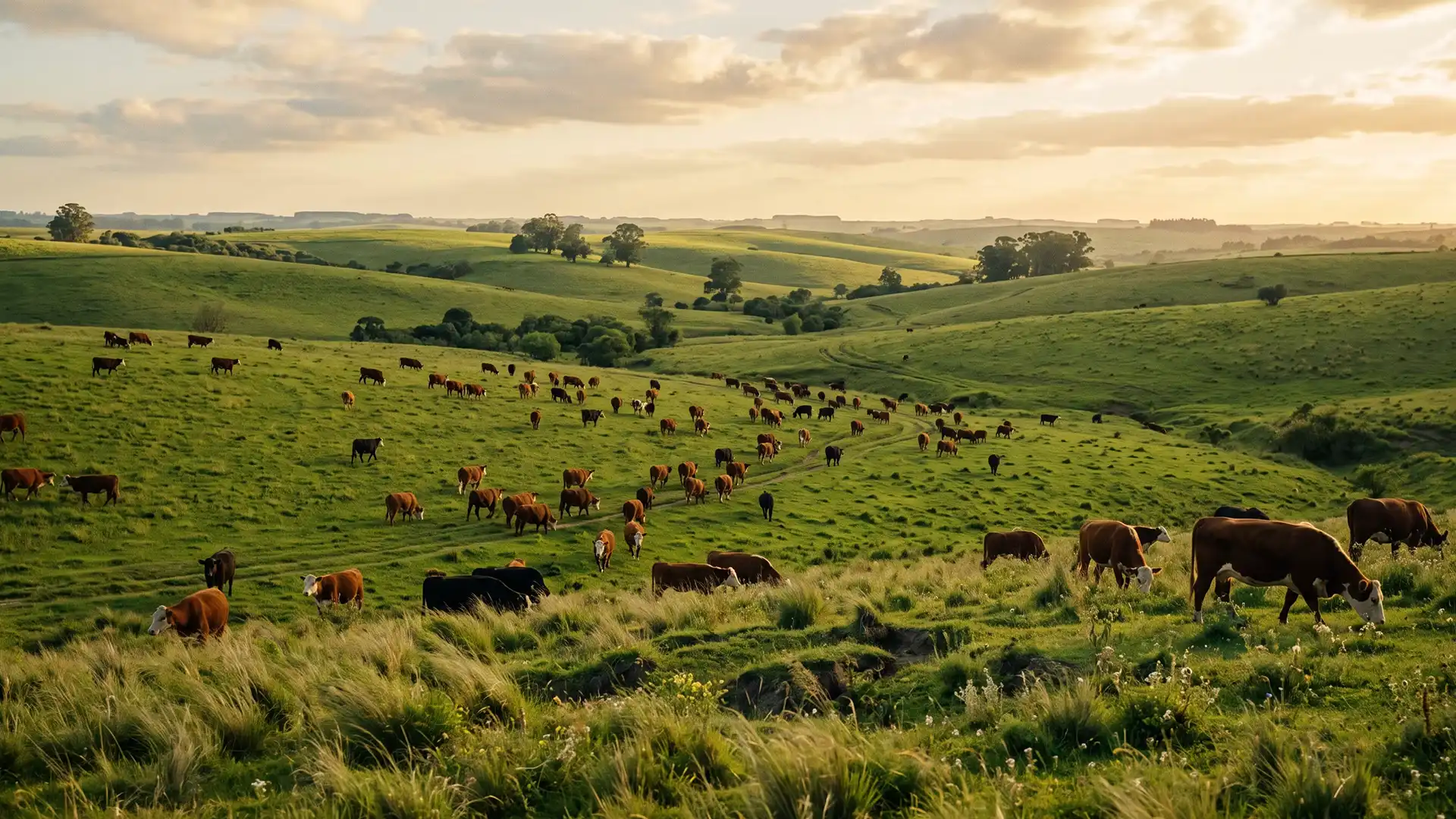
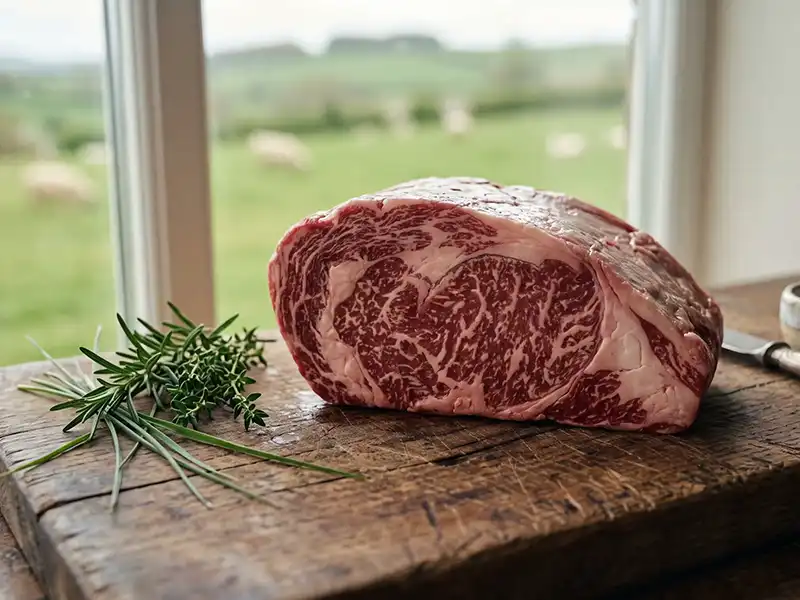
Grass Fed certification guarantees that animals have been raised and fed primarily on pasture, without the use of grains or confinement, ensuring sustainable practices that respect animal welfare. In Uruguay, this certification is supported by protocols developed by the National Meat Institute (INAC) and other recognized entities.
What is Grass Fed certification?
Grass Fed certification guarantees that animals have been raised and fed primarily on pasture, without the use of grains or confinement, ensuring sustainable practices that respect animal welfare. In Uruguay, this certification is supported by protocols developed by the National Meat Institute (INAC) and other recognized entities.
The conceptual basis
The pillars of Grass Fed
Pasture-based diet
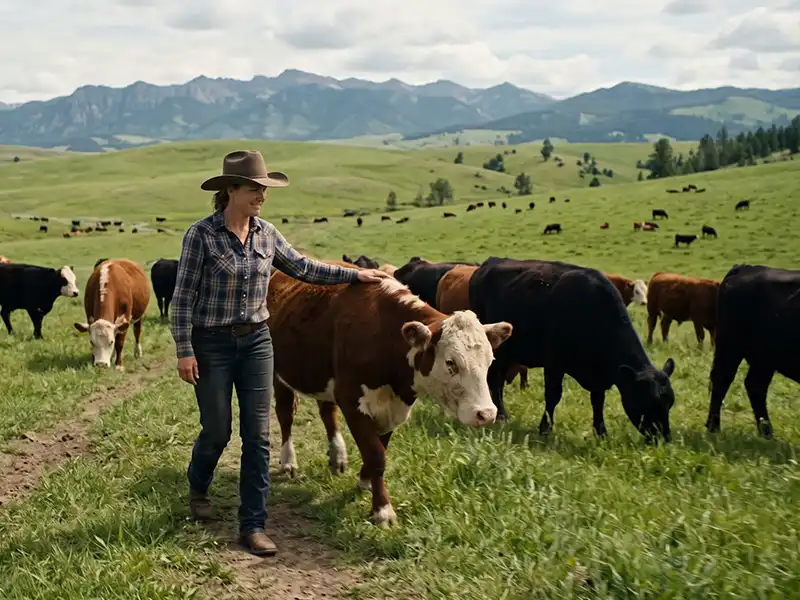
Livestock should be fed predominantly on pasture, with limited supplementation that does not include grains or derivatives.
Without lockdown
The animals must be raised outdoors year-round, without feedlot or confinement systems, with unrestricted access to water and food.
Uruguay's natural advantage
The Uruguayan pasture production system, already deeply rooted in the country's livestock industry, naturally facilitates compliance with Grass Fed requirements compared to other production origins.
Field-to-counter traceability
The program requires complete product traceability, from the field to the point of sale, giving transparency and confidence to the end consumer.
The value of the LSQA seal
We turn technical backing into trust
The LSQA seal is not just a document: it is visible proof that an organization went through a rigorous, objective audit process. When a client, business partner, or regulator sees it, they know it reflects years of certification experience across Latin America, strict technical criteria, and ongoing monitoring — not a self-assessment. That's why the seal becomes a business tool: it reduces the uncertainty of whoever chooses you and communicates, at a glance, a real commitment to quality.
Why certify
Benefits of Grass Fed Certification
Ensure a pasture-based diet, with limited supplementation and no grains or by-products
It promotes animal welfare, guaranteeing outdoor and unconfined breeding throughout the year.
It facilitates access to demanding international markets, where consumers value natural and sustainable products.
Uruguayan beef differentiates itself in the global market from grain-based or feedlot-based productions
It contributes to environmental sustainability by promoting livestock practices that respect ecosystems and reduce the carbon footprint.
It provides transparency and trust to the consumer through complete product traceability
Your journey with LSQA
Certification Process
 Contact with LSQA
 I receive advice
 I provide the information needed for a quote
 I receive a quote
 I confirm the agreement by signing the contract
 Welcome to the LSQA network
 I am contacted to begin coordinating the service
 I meet the assessment team for my confirmation
 Assessment
 If any are detected, gaps are closed
 If applicable, I receive the certificate
 My voice is heard
Frequently asked questions
What is Grass Fed certification?
It is the certification that guarantees that the cattle were raised and fed predominantly on pasture, without the use of grains or confinement, supported in Uruguay by protocols of INAC and other recognized entities.
What type of organizations does Grass Fed apply to?
It applies to livestock farms and beef producers who raise their cattle in a pasture system, without confinement or grain-based feeding.
Does Grass Fed allow any type of supplementation?
Yes, but in a limited way: the protocol allows limited levels of supplementation as long as they do not include grains or grain derivatives.
Is Grass Fed the same as INAC's PCNCU?
Not necessarily, although they share similar principles (free-range farming, pasture-based system). Grass Fed is a specific attribute regarding the type of feed, while PCNCU is a broader program that certifies origin, animal welfare, and other aspects of the production process.
Certify your Grass Fed production with LSQA
Contact us and differentiate your meat in international markets that value grass-fed production.