Certificación

ISO 22000 Certification Gestión Seguridad Alimentaria
ISO 22000 is the international standard for food safety management. Certification with LSQA demonstrates to clients, authorities, and consumers that your organization controls food safety risks throughout the entire chain, backed by an accredited certification body with a regional presence across Latin America.

¿Qué es ISO 22000 Certification?
Controlling risk, not just the final product
ISO 22000 specifies the requirements for a Food Safety Management System (FSMS), applicable to any organization in the food chain, regardless of its size or complexity. It does not certify a specific product: it certifies that the organization has processes capable of systematically identifying and controlling hazards and ensuring safe food.
That's why it combines the Plan-Do-Check-Act (PDCA) cycle with the principles of HACCP (Hazard Analysis and Critical Control Points): each process is planned, executed, measured and adjusted in a continuous improvement loop.

Conceptual basis
The fundamental concepts of food safety
Food safety hazard
A biological, chemical, or physical agent present in food with the potential to cause an adverse health effect.
Prerequisite Programs (PPR)
Basic conditions and activities (hygiene, maintenance, pest control) necessary to maintain a hygienic production environment.
Hazard Analysis and HACCP
Systematic identification of hazards and determination of the critical control points necessary to eliminate them or reduce them to acceptable levels.
Traceability
Ability to track the movement of a food product through the stages of production, processing, and distribution.
Communication in the food chain
Exchange of food safety information between suppliers, customers and stakeholders, both upstream and downstream in the supply chain.
Continuous Improvement Cycle (PDCA)
The system is constantly planned, implemented, verified, and adjusted, in a loop that does not end with the first audit.
Structure of the standard
The 10 chapters of the standard
Object and scope of application
Define the scope of the SGIA and its applicability to the organization.
Regulatory references
Documents essential for the application of the standard.
Terms and definitions
Specific vocabulary of food safety used in the standard.
Organizational context
Identification of relevant internal, external and stakeholder issues related to food safety.
Leadership
Commitment from senior management, food safety policy and defined roles.
Planning
Identification of risks, opportunities and objectives of the food safety system.
Support
Resources, competence, awareness, communication, and documented information.
Operation
Prerequisite programs, hazard analysis, HACCP, non-conformity control and traceability.
Performance evaluation
Monitoring, measurement, analysis, internal audit and management review.
Improvement
Handling non-conformities, corrective actions and continuous improvement of the SGIA.
El valor del sello de LSQA
Convertimos respaldo técnico en confianza
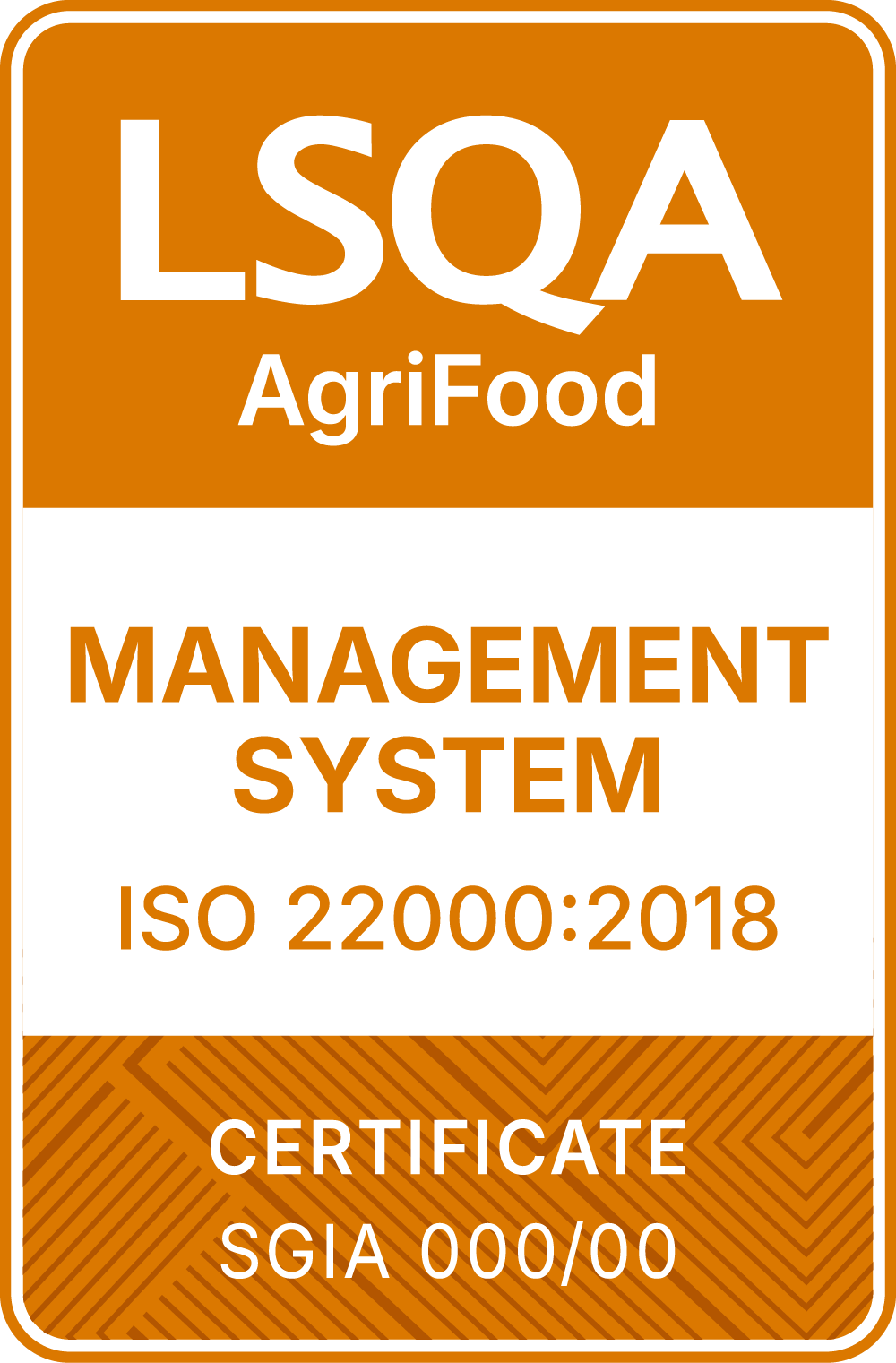
El sello LSQA no es solo un documento: es la prueba visible de que una organización pasó por un proceso de auditoría exigente y objetivo. Cuando un cliente, un socio comercial o un regulador lo ve, sabe que detrás hay años de trayectoria certificando en toda América Latina, criterios técnicos rigurosos y seguimiento constante — no una autoevaluación. Por eso el sello se convierte en una herramienta comercial: reduce la incertidumbre de quien te elige y comunica, de un vistazo, un compromiso real con la calidad.
Why get certified?
Concrete benefits, not just the certificate
Reduce el riesgo de contaminación y retiros de producto del mercado
Facilita el acceso a clientes y mercados que exigen inocuidad certificada en toda la cadena
Mejora la trazabilidad y el control sobre proveedores y procesos
Fortalece la confianza de consumidores, distribuidores y autoridades sanitarias
Base común para integrar, en el futuro, otras normas de gestión (ISO 9001, FSSC 22000)

Your journey with LSQA
Certification Process
 Contact with LSQA
 I receive advice
 I provide the information needed for a quote
 I receive a quote
 I confirm the agreement by signing the contract
 Welcome to the LSQA network
 I am contacted to begin coordinating the service
 I meet the audit team for my confirmation
 I receive the audit plan
 Audit
Audit I receive the report
 If applicable, I receive the certificate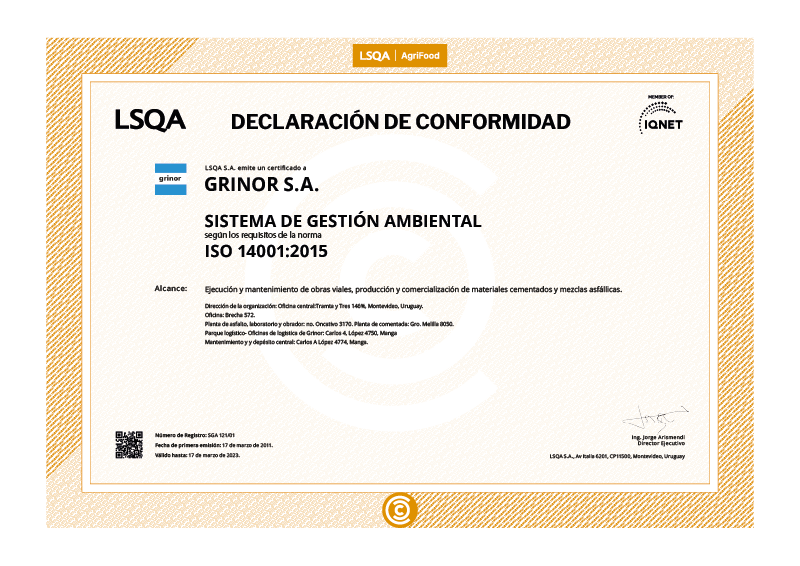
 My voice is heard
Preguntas frecuentes
What is ISO 22000 certification?
ISO 22000 is the international standard that establishes the requirements for a Food Safety Management System. It certifies that an organization controls food safety risks throughout the entire production chain, from raw materials to the end consumer.
How long does the ISO 22000 certification process take?
The entire process usually takes between 3 and 6 months, depending on the size of the organization and how developed its food safety management system is at the start.
How long is the ISO 22000 certificate valid?
The certificate is valid for 3 years, with annual follow-up audits that verify that the system remains compliant with the standard.
Which companies can be certified in ISO 22000?
Any organization in the food chain can be certified: primary producers, food processors, packaging manufacturers, transporters, distributors, and food-related service providers.
What is the difference between ISO 22000 and HACCP?
HACCP (Hazard Analysis and Critical Control Points) is a methodology specifically focused on identifying and controlling hazards during food production. ISO 22000 incorporates the principles of HACCP but integrates them within a broader management system, which also includes requirements for continual improvement, communication, and management commitment.
Is ISO 22000 certification mandatory?
No, it's a voluntary certification. However, many customers in the food industry—especially large retail chains and exporters—require it as a prerequisite for operating as suppliers.
Ready to certify your food safety management system?
Tell us about your organization and we'll contact you about next steps.