

Verification

Water Footprint
At LSQA we offer the specialized water footprint verification service, designed to assess and certify the impact of water use and consumption by organizations throughout their production chain.
What is a water footprint?
The water footprint measures the volume of water consumed or polluted throughout a process or product. LSQA verification independently assesses this impact and helps organizations identify opportunities to improve their water efficiency, reduce their environmental impact, and comply with international regulations.

Verification process
The 3 levels of the water footprint
Commitment
Evaluate the organization's initial commitment to efficient water management.
Verified
It confirms that the organization implemented effective water management measures and reduced its impact.
Efficiency
It recognizes organizations that achieved a high level of efficiency in water use and optimized their processes.
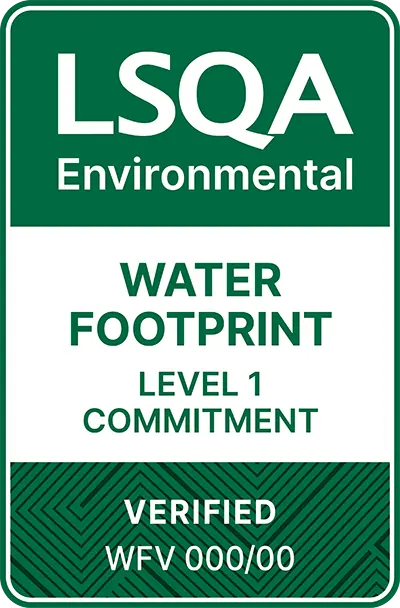
The value of the LSQA seal
We turn technical backing into trust
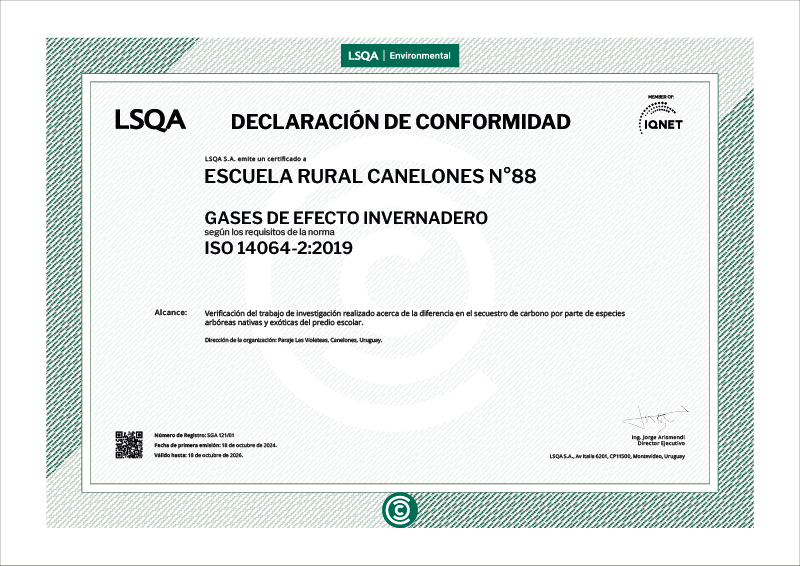
The LSQA seal is not just a document: it is visible proof that an organization went through a rigorous, objective audit process. When a client, business partner, or regulator sees it, they know it reflects years of certification experience across Latin America, strict technical criteria, and ongoing monitoring — not a self-assessment. That's why the seal becomes a business tool: it reduces the uncertainty of whoever chooses you and communicates, at a glance, a real commitment to quality.
Why certify
What water footprint verification contributes
Identify specific opportunities to improve water use efficiency.
It reduces the organization's environmental impact throughout the entire production chain.
It helps to comply with international water management regulations.
It strengthens the organization's reputation with customers and stakeholders.
It positions the company as a leader in protecting a vital resource.

Your journey with LSQA
Certification Process
 Contact with LSQA
 I receive advice
 I provide the information needed for a quote
 I receive a quote
 I confirm the agreement by signing the contract
 Welcome to the LSQA network
 I am contacted to begin coordinating the service
 I meet the assessment team for my confirmation
 Assessment
 If any are detected, gaps are closed
 If applicable, I receive the certificate
 My voice is heard
Frequently asked questions
What is LSQA's water footprint verification?
It is a service that evaluates and certifies the impact of an organization's water use and consumption throughout its production chain, identifying opportunities for improvement in the management of this resource.
What are the levels of water footprint verification?
The process has three levels: Level 1 (Commitment), which assesses the organization's initial commitment; Level 2 (Verified), which confirms that effective water management measures have been implemented; and Level 3 (Efficiency), which recognizes organizations with a high level of efficiency and optimized processes in water use.
How does one progress between the verification levels?
Each level represents a stage of increasing maturity in water management. An organization can start at Level 1 (Commitment) and progress to Level 2 and Level 3 as it implements concrete consumption reduction measures and optimizes its processes.
What is the difference between water footprint and carbon footprint?
The water footprint measures the volume of water consumed or polluted throughout a process or product, while the carbon footprint measures the greenhouse gas emissions associated with an activity. They are distinct environmental indicators, although both can be verified using LSQA.
What are the benefits of certifying your water footprint with LSQA?
In addition to identifying opportunities to reduce water consumption and environmental impact, verification strengthens the organization's reputation, builds trust among its stakeholders, and helps to comply with international regulations.
Is it mandatory to verify the water footprint?
It is not legally required in most countries in the region, but more and more corporate clients and markets that prioritize sustainability value it as a competitive advantage, especially in sectors with high water consumption.
Ready to check your water footprint?
Contact LSQA and start the verification process at the level that corresponds to your organization.