
Verification

Carbon Footprint
We assess the environmental impact of organizations and products throughout their production chain, quantifying greenhouse gas emissions and classifying their performance level.
Measure in order to reduce
The carbon footprint quantifies the total greenhouse gas (GHG) emissions generated directly or indirectly by an organization, product, or activity. LSQA verification goes beyond simply calculating this number: it categorizes an organization's performance—reduced, low, neutral, offset neutral, and neutral plus—differentiating between offset and unoffset emissions.
This level of detail allows companies to accurately identify where their largest sources of emissions are, prioritize reduction actions, and demonstrate concrete progress toward their environmental goals.
Documents
Carbon Footprint Program in Livestock Production Version 3 -HCPG v.3-

Conceptual basis of the process
The 5 principles of GHG verification
Relevance
Select the appropriate sources, data, and methodologies for the needs of the intended user of the information.
Integrity
Include all relevant GHG emissions and removals within the defined scope, without omissions that distort the result.
Coherence
To allow meaningful comparisons of GHG information over time, applying consistent methodologies.
Transparency
Disclose GHG information in a clear, factual and understandable manner, based on a verifiable audit trail.
Accuracy
Reduce biases and uncertainties as much as possible, within what is practical.
Verification result
The 5 levels of carbon footprint
Reduced
The organization demonstrates a measurable decrease in its emissions compared to a baseline period.
Low
Emissions are below industry benchmarks.
Neutral
Remaining emissions are managed in a balanced way against absorption or reduction capacities.
Neutral Compensated
The emissions balance is achieved through compensation with verified carbon credits.
Neutral Plus
The organization offsets 100% of its emissions and also contributes an additional surplus of positive impact.
The value of the LSQA seal
We turn technical backing into trust
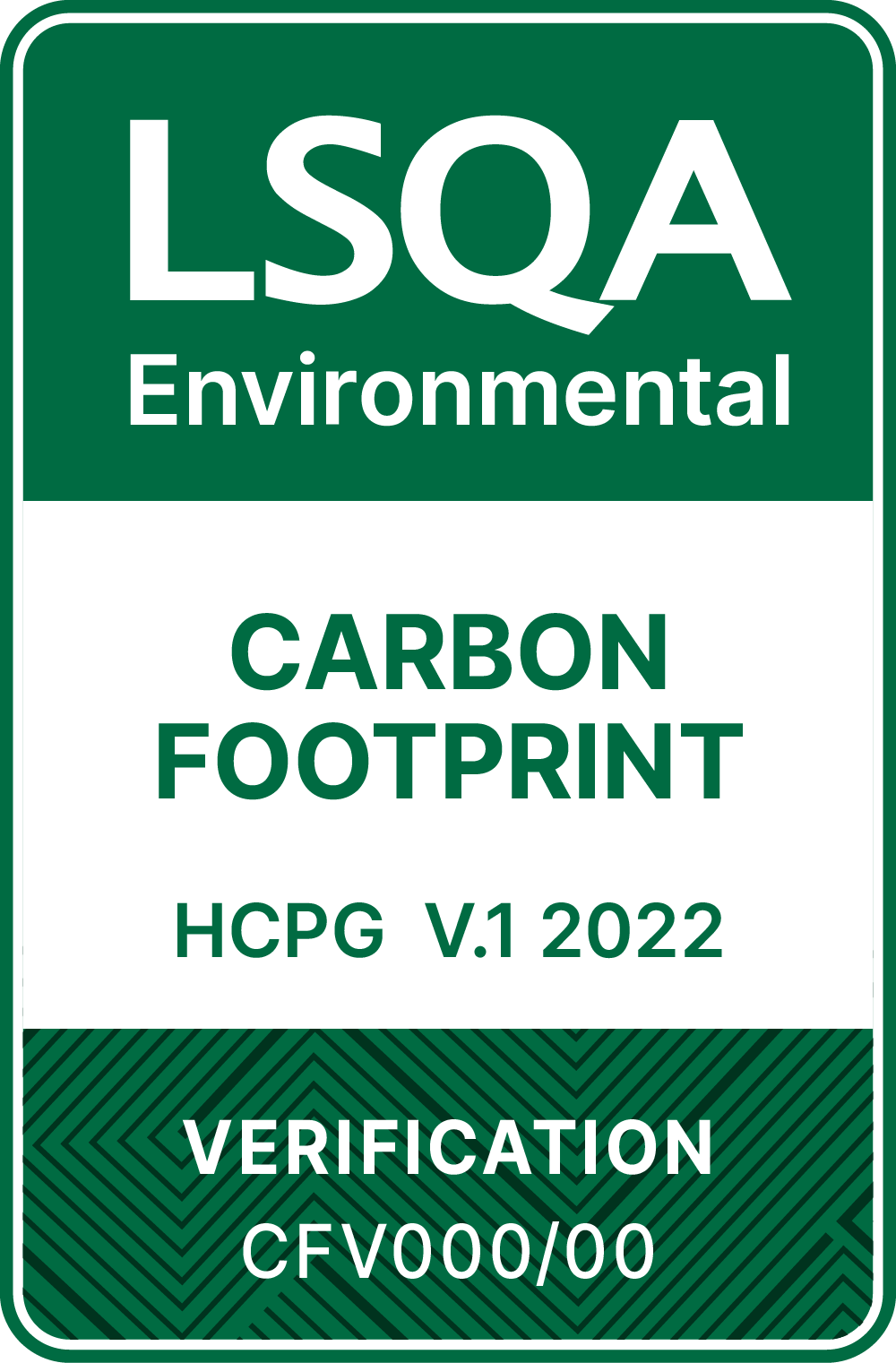
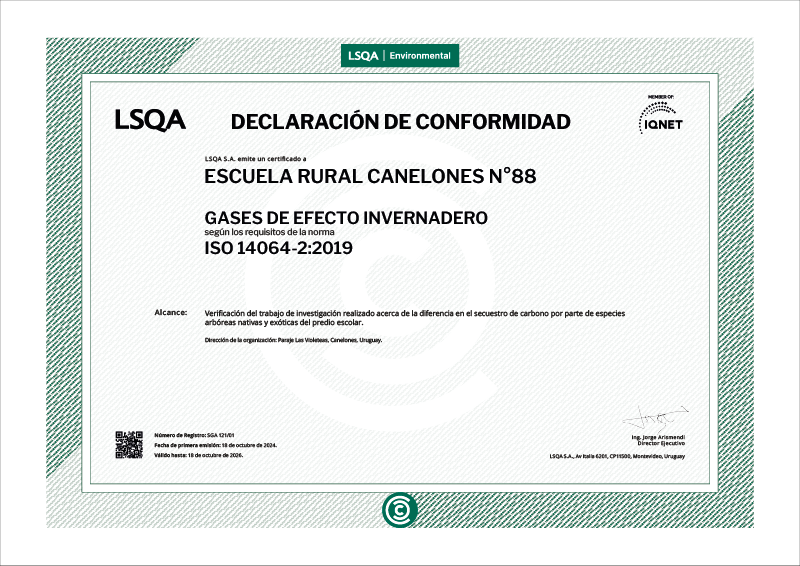
The LSQA seal is not just a document: it is visible proof that an organization went through a rigorous, objective audit process. When a client, business partner, or regulator sees it, they know it reflects years of certification experience across Latin America, strict technical criteria, and ongoing monitoring — not a self-assessment. That's why the seal becomes a business tool: it reduces the uncertainty of whoever chooses you and communicates, at a glance, a real commitment to quality.
Why get certified?
Concrete benefits, not just the certificate
Compliance with international goals and reporting requirements to investors or clients
Identifying specific opportunities for emissions reduction and cost savings
Differentiation from tenders and clients that demand evidence of environmental management
Strengthening reputation and building trust among stakeholders
Basis for moving towards carbon neutrality in a progressive and verifiable way

Your journey with LSQA
Certification Process
 Contact with LSQA
 I receive advice
 I provide the information needed for a quote
 I receive a quote
 I confirm the agreement by signing the contract
 Welcome to the LSQA network
 I am contacted to begin coordinating the service
 I meet the assessment team for my confirmation
 Assessment
 If any are detected, gaps are closed
 If applicable, I receive the certificate
 My voice is heard
Frequently asked questions
What is carbon footprint verification?
It is the independent measurement and verification of greenhouse gas (GHG) emissions generated by an organization, product, or event. LSQA verifies that the calculation has been performed following internationally recognized methodologies, such as the GHG Protocol or the ISO 14064 standard.
What is the difference between carbon footprint and water footprint?
A carbon footprint measures the greenhouse gas emissions associated with an activity, while a water footprint measures the volume of water consumed or polluted throughout a process or product. They are distinct environmental indicators, although both can be certified by LSQA.
How long does the carbon footprint verification process take?
It depends on the defined scope (Scope 1, 2 or 3) and the size of the organization, but in general the process takes between 2 and 4 months, including data collection, calculation and verification by the audit team.
What are Scopes 1, 2, and 3 in carbon footprint calculation?
Scope 1 refers to direct emissions from the organization (e.g., on-site combustion). Scope 2 refers to indirect emissions from purchased electricity consumption. Scope 3 includes all other indirect emissions from the value chain, such as transportation, suppliers, and product use.
Is it mandatory to measure your carbon footprint?
In most countries in the region it is not legally required, but more and more corporate clients, public tenders and export markets are demanding it as part of their sustainability or supply chain criteria.
What are the benefits of certifying your carbon footprint with LSQA?
In addition to meeting commercial or regulatory requirements, independent verification lends credibility to the data with customers, investors, and regulatory bodies, and serves as a starting point for defining emissions reduction targets.
Ready to check your carbon footprint?
Tell us about your organization and we will contact you for next steps.